Global Institutions
At the crossroads of diplomacy and global institutions, investment meets influence and opportunity.
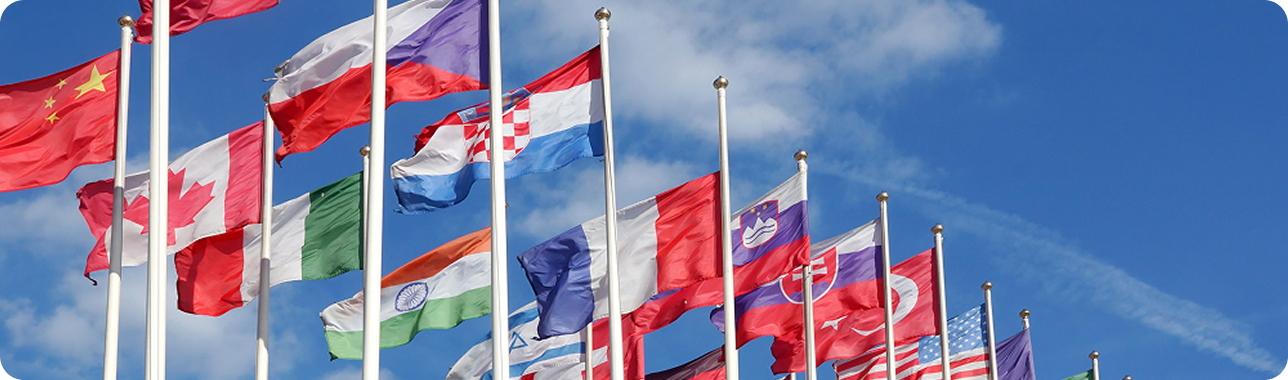
Where global influence meets opportunity.
Rome is one of Europe’s most consequential hubs of national governance and international engagement. As the seat of the Presidency of the Republic, the Italian Parliament, and the Ministry of Foreign Affairs, the city is central to policy decisions that influence Europe’s fourth-largest economy. This institutional density draws global business leaders, diplomats and decision-makers, offering direct access to the mechanisms that shape regulatory, economic and trade environments.
A rare dual diplomatic ecosystem
Rome’s diplomatic landscape is unique on the global stage. The city hosts more than 140 embassies to Italy and over 80 to the Holy See, making it one of the few capitals in the world with dual diplomatic representation within the same urban territory. This extraordinary concentration of foreign missions and cultural institutes fosters continuous intercultural exchange and high-level networking – foundations for strategic partnerships, trade missions and bilateral business initiatives.
Multilateral hubs powering global opportunities
In Rome, international institutions drive critical global agendas. The city hosts major United Nations agencies focused on food security, agriculture and development – including the FAO, WFP and IFAD – creating a nexus for policy, research and public-private collaboration that resonates across sectors such as food tech, sustainability and supply chain innovation. Complementing this presence, the European Union’s Delegation to Italy and the Holy See strengthens connections between EU policy frameworks and multilateral action in areas like climate, trade and economic development.
An internationally respected investment context
Italy’s overall investment landscape is gaining positive momentum on the global stage. According to the 2025 Foreign Direct Investment Confidence Index, Italy ranks 8th out of 25 major economies in terms of attractiveness for future foreign direct investment – a significant improvement from its 11th place in 2024 – reflecting growing investor confidence in the country’s economic and regulatory outlook. Meanwhile, recent data show that foreign direct investment projects in Italy increased by approximately 5% in 2024, bucking a broader European downturn in investment activity.
These macro trends combine with Rome’s inherent institutional strengths to create fertile terrain for global business. The city’s role as both political capital and diplomatic crossroads enhances access to decision-makers, while Italy’s improving attractiveness as an investment destination signals durable confidence from corporate leaders worldwide.
A cosmopolitan community and business ecosystem
Beyond formal institutions, Rome’s international character is reflected in its vibrant expatriate communities and diverse professional networks. With a population that includes tens of thousands of foreign residents from Europe, Asia, Africa and the Americas, the city lives global perspectives daily – fostering inclusive ecosystems that benefit international talent and enterprise alike. For investors considering relocation, this cosmopolitan fabric offers not only cultural richness but also tangible opportunities for collaboration, market access and cross-sector innovation.
Choosing Rome means positioning oneself at the intersection of diplomacy, policy influence and global business – a unique vantage point from which to navigate, shape and benefit from the economic currents of the 21st century.